Introduction
Welcome back, MilkMates! Before we dive into the “how-to” of achieving a deep latch, we need to understand the fundamental importance of the latch itself. It is the single most critical factor that determines the comfort and success of your entire breastfeeding journey.
A poor latch doesn’t just cause pain; it tells your body the wrong message. Let’s explore why getting the latch right is the foundational step for every breastfeeding parent.
1. The Three P’s: Why the Latch is Non-Negotiable
A proper latch directly impacts three key areas of your breastfeeding experience:
- Pain Prevention 🩹
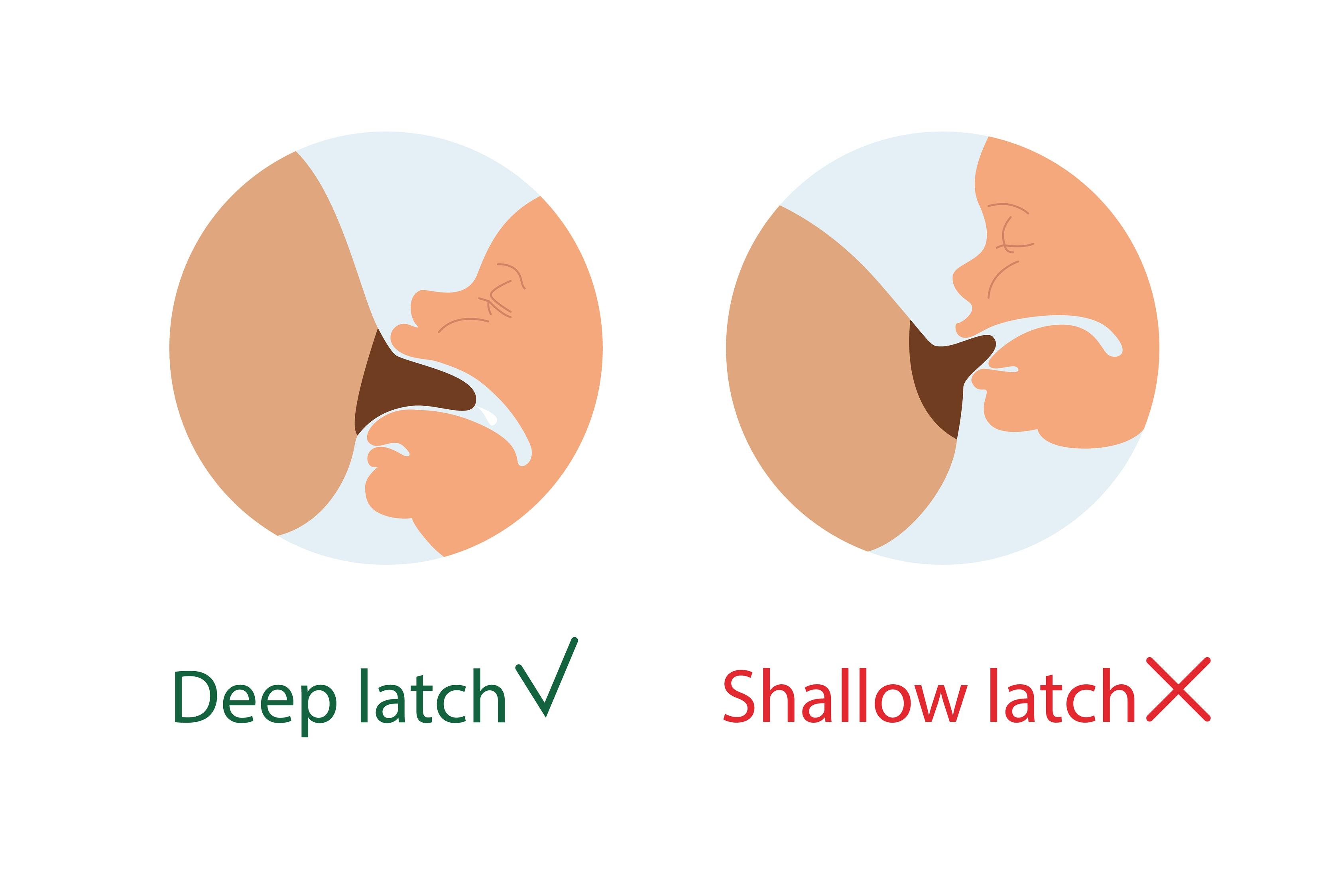
- The Problem: A shallow latch means your baby is only sucking on the delicate nipple, which is not designed to handle that kind of friction and pressure. This quickly leads to pinching, cracking, and severe pain.
- The Solution: A deep latch ensures the baby draws the entire nipple and surrounding areola into their mouth, cushioning it against the soft palate. The pressure is distributed across the areola, resulting in a pain-free, comfortable feed.
- Proper Milk Transfer 🥛
- The Problem: To extract milk, the baby’s tongue needs to compress the milk ducts beneath the areola. A shallow latch can’t effectively reach these ducts. This means long feeds and slow weight gain for the baby.
- The Solution: A deep latch allows the baby to use their jaw and tongue effectively to compress the milk sinuses, resulting in efficient milk flow and transfer. This means shorter, more satisfying feeds and confidence in your baby’s weight gain.
- Promotes Supply 📈
- The Science: Milk production works on supply and demand. If milk is not efficiently removed, the body registers that the milk is not needed, and production slows down.
- The Solution: Proper milk transfer (from a deep latch) sends a clear, strong signal to your body: “Make more milk!” Establishing a deep latch early on is the best natural way to build and maintain a robust milk supply.
2. The Latch Checklist: What Does Success Look Like?
A good latch is easy to spot once you know what to look for. Check these four signs every time your baby latches:
- 1. Wide Mouth (The Yawn): Your baby’s mouth should be wide open—like a yawn—not just parted.
- 2. Fish Lips: Both the top and bottom lips should be flanged outward (everted), like a fish’s lips, not tucked inward.
- 3. Jaw Movement & Swallowing: You should see rhythmic, strong movement in their jaw and temples. You should hear deep, audible swallows rather than tiny clicking or chomping sounds.
- 4. Nipple Comfort: You may feel a slight tug or initial pinch for a few seconds, but after that, the feeding should be completely comfortable.
Setting the Stage for Success
The latch isn’t luck; it’s a skill you both learn. You’ve already taken the first step by understanding its importance. Now, let’s learn how to execute it!
If you haven’t yet, be sure to read Part 2: Achieving the Deep Latch: A Step-by-Step Guide, which walks you through the practical positioning, aiming, and timing techniques you need to make the perfect latch happen!
 MilkMates PH
Leave a comment